If you're comparing ithPOS and SumUp, you've probably reached the point where your business needs more than simply accepting card payments. While both platforms enable businesses to take payments, they have been designed with different types of merchants in mind.
SumUp has become one of Europe's most recognisable payment providers thanks to its affordable card readers, simple setup and transparent pricing. It is an excellent choice for sole traders, market traders, pop-up businesses, mobile services and smaller retailers looking for an easy way to start accepting card payments without a lengthy contract.
Hospitality businesses, however, typically require much more than a payment terminal.
Restaurants, cafés, pubs, hotels and takeaways operate in fast-paced environments where staff need to manage tables, communicate with kitchens, split bills, process bar tabs, coordinate online orders and deliver a seamless customer experience during their busiest periods.
This is where the differences between ithPOS and SumUp become much more apparent.
Rather than simply processing payments, ithPOS has been built as a complete hospitality operating platform, combining EPOS, integrated card payments, online ordering, kitchen management, hotel integrations and business intelligence into one solution.
This guide compares both platforms to help you decide which is the better fit for your business.
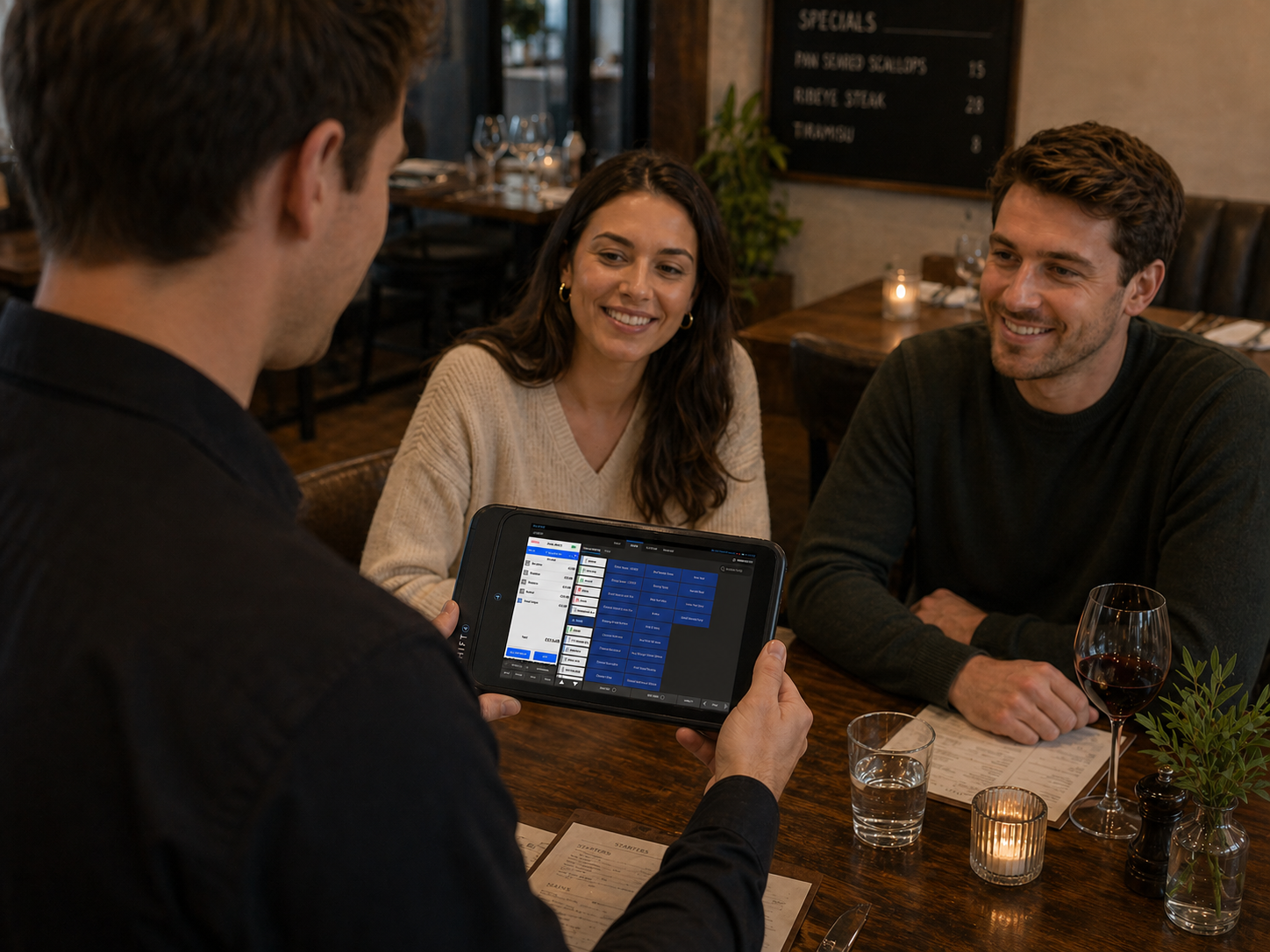
ithPOS vs SumUp at a Glance
| Feature | ithPOS | SumUp |
|---|---|---|
| Starting Price | From €39 per month | Free POS app or paid POS plans |
| Upfront Hardware Cost | €0 upfront on qualifying packages | Hardware purchased separately |
| Contract | 12 months | No fixed-term contract |
| Installation | Professional on-site installation included | Self-installation |
| Project Management | Included | Self-managed |
| Staff Training | Included | Self-service resources |
| Integrated Card Payments | Included | Included |
| Customer-Facing Payment Display | Yes | Not available as a payment-enabled customer display |
| Handheld Ordering | Yes | Limited |
| Table Management | Full hospitality table management | Available on higher tiers |
| Open Tabs | Yes | Limited |
| Split Bills | Yes | Basic functionality |
| Table Transfers | Yes | Limited |
| Kitchen Display System (KDS) | Included | Limited support |
| Kitchen Printers | Supported | Supported |
| Business Intelligence Reporting | Advanced dashboards and KPI reporting | Standard sales reporting |
| Just Eat Integration | Yes | No native integration |
| Deliveroo Integration | Yes | No native integration |
| Uber Eats Integration | Yes | No native integration |
| Flipdish Integration | Yes | No native integration |
| Oracle Opera Cloud Integration | Yes | No |
| Nory Integration | Yes | No |
| Multi-site Management | Yes | Limited |
| Local Installation | Yes | No |
| Local Hospitality Support | Yes | No |
| 24/7 Telephone Support | Available | Primarily online support |
| Lifetime Hardware Warranty | Included | Standard manufacturer warranty |
| Best For | Restaurants, cafés, pubs, hotels and takeaways | Sole traders, retailers and small businesses |
Pricing: Looking Beyond the Monthly Subscription
When comparing EPOS systems, many businesses understandably look at the monthly subscription price first. While this is important, it rarely tells the full story.
The total cost of ownership includes much more than the monthly fee.
Businesses should also consider:
- Hardware costs
- Installation
- Configuration
- Project management
- Staff training
- Ongoing support
- Equipment replacement
- Future scalability
SumUp keeps its pricing attractive by allowing businesses to purchase hardware as required and install everything themselves. For many small businesses, particularly those operating a single payment device, this approach works extremely well.
Hospitality businesses often have different requirements.
A busy restaurant may require multiple terminals, receipt printers, kitchen printers, handheld ordering devices and customer payment equipment. Installing, configuring and testing each device can quickly become time-consuming, particularly when downtime affects trading.
ithPOS takes a different approach.
Rather than simply shipping hardware, ithPOS includes professional installation, configuration, project management and deployment as part of the implementation. Staff receive training before going live, ensuring the business is ready to trade with confidence from day one.
Qualifying packages also include the required hardware with €0 upfront, helping businesses avoid significant initial capital expenditure.
To further reduce long-term ownership costs, all supplied hardware is backed by a lifetime hardware warranty, providing additional peace of mind should equipment fail during normal operation.
For many hospitality operators, predictable ownership costs and professional deployment can prove more valuable than selecting the lowest monthly subscription alone.
Hospitality Needs More Than a Payment System
One of the biggest differences between ithPOS and SumUp is the type of business each platform has been designed to serve.
Retail businesses generally process straightforward transactions.
A customer selects an item, pays and leaves.
Hospitality businesses rarely operate that way.
Instead, staff are constantly managing multiple tables, open tabs, split bills, drinks orders, food preparation, kitchen communication and customer requests simultaneously.
During busy Friday and Saturday services, seconds matter.
Servers need to:
- Open customer tabs
- Transfer tables between staff
- Split bills between guests
- Send food directly to the kitchen
- Route drinks to the bar
- Modify menu items
- Process payments quickly
- Turn tables efficiently
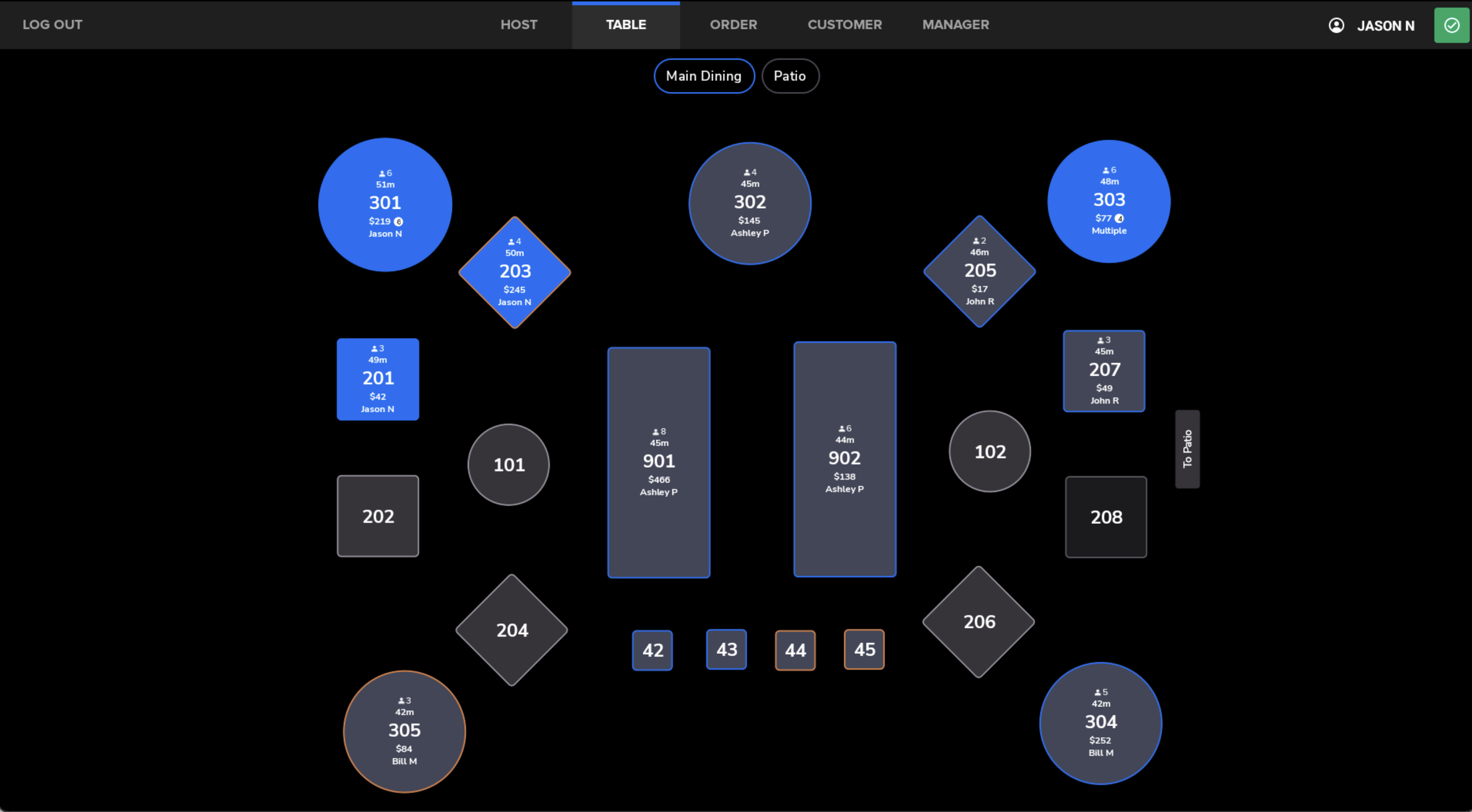
These workflows are fundamental to modern hospitality operations.
Rather than adapting retail software to perform these tasks, ithPOS has been designed around hospitality workflows from the outset.
The result is a platform that helps staff spend less time navigating technology and more time serving customers.
Online Ordering Without Multiple Systems
Online ordering has become an essential revenue stream for many hospitality businesses.
Managing multiple delivery platforms independently can quickly become inefficient.
Orders may need to be manually entered into the EPOS, increasing the risk of delays and mistakes while adding unnecessary administration.
ithPOS integrates directly with:
- Just Eat
- Deliveroo
- Uber Eats
- Flipdish
This allows online orders to flow directly into the EPOS, helping businesses manage dine-in, collection and delivery orders from a single platform.
The benefits include:
- Reduced manual entry
- Fewer order errors
- Faster kitchen communication
- Centralised menu management
- Improved operational efficiency
- Better customer experiences
Rather than juggling multiple tablets across the counter, hospitality businesses can streamline their operation through one integrated system.
Integrated Payments That Work as One System
Taking card payments is only one part of the customer journey. The real benefit comes when your payment solution works seamlessly with your EPOS.
Both ithPOS and SumUp allow businesses to accept card payments, but ithPOS has been designed so that the payment process is fully integrated into the hospitality workflow.
Staff can process payments directly from the EPOS, reducing the need to manually enter transaction values into a separate terminal. This not only speeds up the checkout process but also reduces the risk of keying errors and incorrect payment amounts.
For hospitality businesses serving hundreds of customers during busy periods, even small improvements in transaction speed can have a significant impact on customer satisfaction and table turnover.
Integrated payments also simplify reconciliation. As transactions flow directly through the EPOS, businesses spend less time matching card receipts to sales reports, making end-of-day balancing quicker and more accurate.
Whether customers are paying at the counter, at the table or collecting takeaway orders, staff benefit from a consistent payment experience that keeps service moving efficiently.
A Smarter Customer Payment Experience
One of the features that sets ithPOS apart is its payment-enabled customer-facing display.
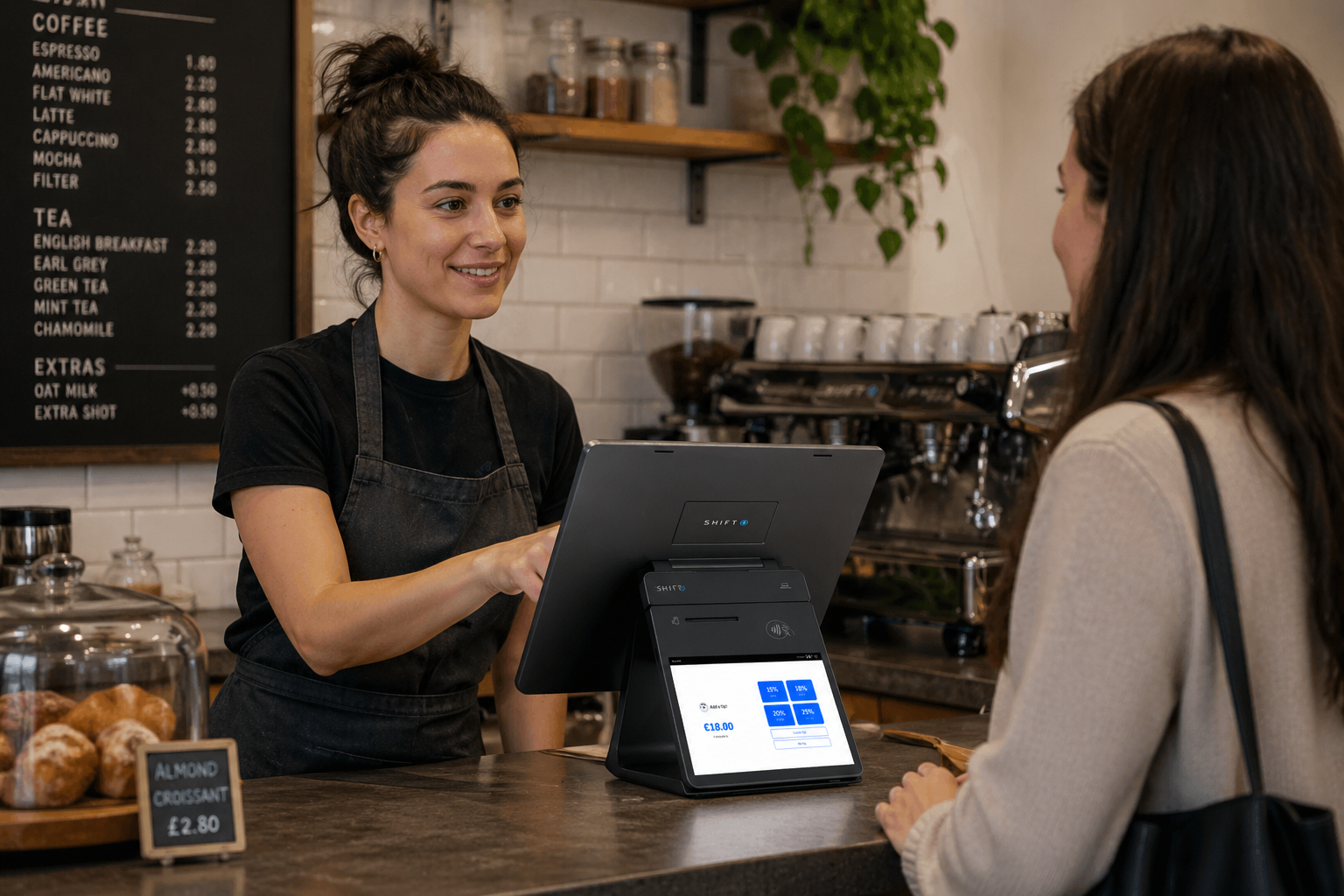
Unlike a traditional payment terminal positioned beside the till, the customer-facing display combines payment acceptance with a digital customer display, helping create a cleaner and more modern checkout experience.
This delivers several practical advantages.
Customers can:
- Review every item on their order before paying.
- Pay directly on the display.
- Clearly see transaction totals.
- Follow on-screen prompts without staff needing to turn the EPOS towards them.
Because the display itself accepts payments, there is no requirement for a separate PIN pad sitting alongside the EPOS, helping free valuable counter space.
For businesses where the EPOS is positioned away from the customer, the display can also be extended into the customer area using a simple USB connection, making payment easier without relocating the main till.
The customer-facing display also supports business branding, allowing logos, promotional graphics and marketing messages to be displayed when the terminal is idle. This provides an additional opportunity to reinforce brand identity or promote loyalty schemes, seasonal offers and upcoming events.
Not every EPOS provider offers payment-enabled customer displays.
The hardware itself must support secure payment processing while also meeting PCI security standards and the certification requirements of acquiring banks. This additional complexity means many systems continue to rely on separate payment terminals rather than integrating payment acceptance directly into the customer display.
For hospitality businesses looking to maximise counter space while improving the customer experience, a payment-enabled customer display can offer a practical advantage.
Kitchen Display Systems: Improving Communication During Service
Effective communication between front-of-house and kitchen staff is critical to delivering consistent service.
Many hospitality businesses still rely heavily on printed kitchen tickets, but as order volumes increase these can become difficult to manage, particularly when multiple chefs are preparing different parts of an order.
ithPOS supports both traditional kitchen printers and modern Kitchen Display Systems (KDS), allowing businesses to choose the workflow that best suits their operation.
With a Kitchen Display System, orders appear instantly on digital screens within the kitchen, reducing paper usage while improving order visibility and communication.
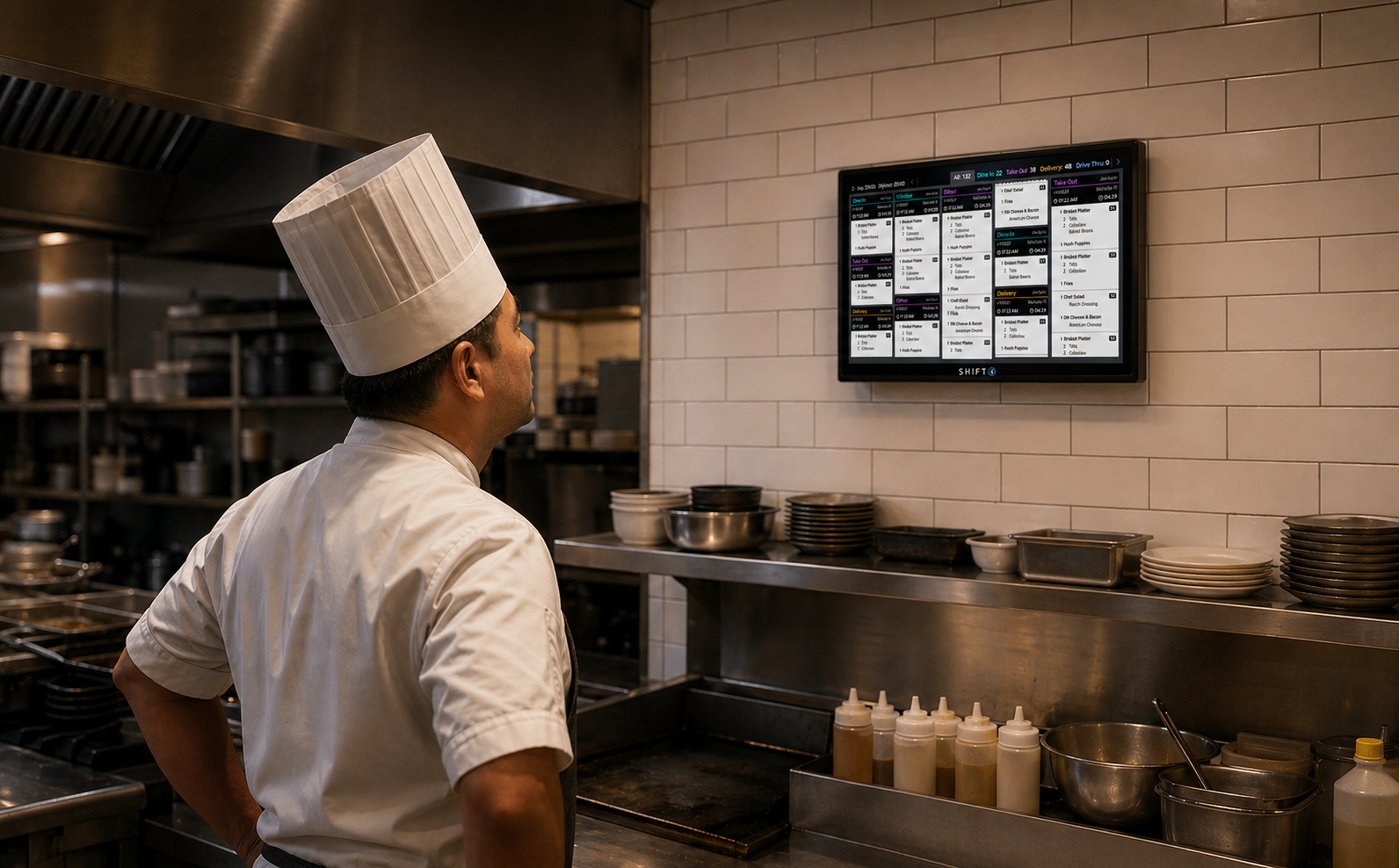
Benefits include:
- Faster order routing.
- Improved kitchen organisation.
- Reduced printing costs.
- Better visibility of preparation status.
- Fewer missed or misplaced orders.
- Improved coordination between kitchen stations.
For restaurants, cafés and takeaways processing large numbers of orders, a Kitchen Display System can significantly improve operational efficiency during busy services.
Business Intelligence That Supports Better Decisions
Every EPOS system provides sales reports, but there is an important difference between reporting what has already happened and providing information that helps businesses make better operational decisions.
ithPOS includes advanced Business Intelligence capabilities designed to help operators understand how their business is performing.
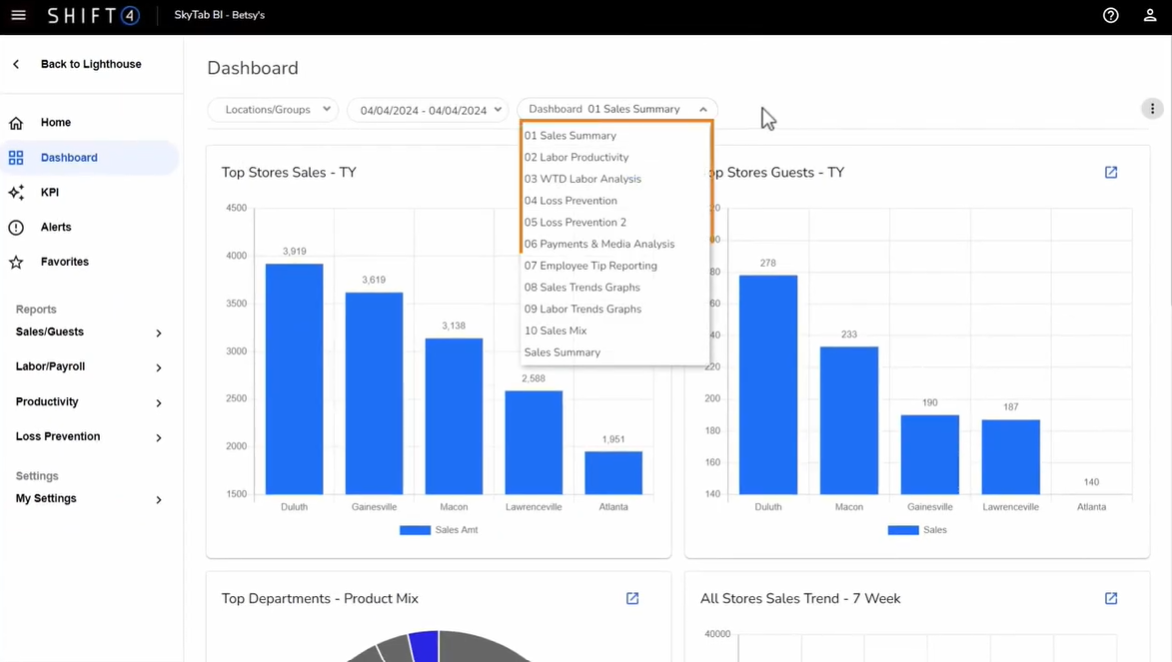
Rather than simply viewing daily sales totals, businesses can monitor:
- Key Performance Indicators (KPIs)
- Sales trends
- Trading patterns
- Product performance
- Department performance
- Hourly trading activity
- Staff performance
- Scheduled management reports
This allows owners and managers to identify opportunities, respond to changing customer behaviour and make more informed commercial decisions.
For multi-site operators, consistent reporting across locations also makes it easier to benchmark performance and identify best practice.
While basic reporting answers the question, "What happened today?", Business Intelligence helps answer the more valuable question, "Why did it happen, and what should we do next?"
Designed for Hotels as Well as Restaurants
Many hospitality businesses require their EPOS to work alongside a Property Management System (PMS).
ithPOS integrates with Oracle Opera Cloud, one of the world's leading hotel management platforms.
This integration allows food and beverage transactions to be posted directly to guest rooms, eliminating the need for staff to manually transfer charges between systems.
The benefits include:
- Faster room charging.
- Reduced administration.
- Fewer manual entry errors.
- Improved guest experience.
- Simplified reconciliation between the restaurant and reception.
For hotels operating restaurants, bars or room service, this integration helps create a smoother experience for both staff and guests while reducing unnecessary administration.
Integrating More of Your Hospitality Technology
Modern hospitality businesses increasingly rely on specialist software to manage different parts of their operation.
Rather than operating these systems independently, ithPOS supports integrations that allow businesses to connect their technology and reduce duplicated work.
For example, ithPOS integrates with Nory, helping hospitality businesses improve workforce planning and operational efficiency.
By allowing systems to work together, operators can reduce manual processes while gaining better visibility across the business.
As hospitality technology continues to evolve, the ability to integrate with other business systems becomes increasingly valuable.
Built to Grow With Your Business
Many businesses begin with a simple card payment solution because it meets their immediate requirements.
As the business grows, those requirements often change.
Additional staff are recruited.
More payment devices are required.
Online ordering becomes an important source of revenue.
Kitchen communication becomes more complex.
Management requires better reporting.
Some businesses expand to multiple locations.
Rather than replacing an entire EPOS system every few years, many hospitality operators prefer to invest in a platform that can grow alongside their business.
ithPOS has been designed with this progression in mind.
Whether you're operating a single café today or planning to expand into multiple restaurants, pubs or hotel locations, the platform provides the flexibility to support future growth without requiring a complete technology replacement.
Investing in a scalable hospitality platform today can help reduce disruption and implementation costs as your business develops tomorrow.
Professional Installation, Training and Local Support
Selecting a new EPOS system is about far more than the software itself. A successful implementation depends on planning, installation, configuration and ensuring your team is confident using the system before serving customers.
This is one of the biggest differences between ithPOS and SumUp.
SumUp has been designed around simplicity, allowing businesses to purchase hardware online, download the software and complete the installation themselves. For many small businesses with straightforward requirements, this approach is perfectly suitable and allows merchants to start accepting payments quickly.
Hospitality environments, however, are often considerably more complex.
A restaurant may require multiple EPOS terminals, handheld ordering devices, kitchen printers or Kitchen Display Systems, integrated payment devices, customer-facing displays and connections to delivery platforms. Each component needs to be configured correctly before service begins.
ithPOS provides a complete implementation service that includes:
- Professional project management
- On-site installation
- System configuration
- Menu programming
- Hardware deployment
- Staff training
- Go-live assistance
This approach helps reduce disruption while giving businesses confidence that their new system is ready before opening their doors to customers.
Support When Hospitality Businesses Need It Most
Technology problems rarely happen at convenient times.
For many hospitality businesses, the busiest trading periods are evenings, weekends and public holidays. During these periods, even a short interruption can affect customer experience, staff productivity and revenue.
When choosing an EPOS provider, it is therefore worth considering not only the software itself but also the level of support available after installation.
ithPOS provides hospitality-focused support together with 24/7 telephone support, giving businesses access to assistance whenever they need it.
Having experienced support available by telephone can be particularly valuable when a venue is in the middle of a busy service and requires immediate assistance.
For businesses that rely on their EPOS throughout every trading day, responsive support is an important part of the overall value of the solution.
Which Businesses Should Choose SumUp?
SumUp has earned its reputation by making card payments simple, affordable and accessible.
It is an excellent choice for businesses that primarily need to accept card payments without requiring advanced hospitality functionality.
Examples include:
- Sole traders
- Market traders
- Mobile businesses
- Independent retailers
- Service professionals
- Businesses with relatively straightforward payment requirements
For these organisations, SumUp offers an easy-to-use solution with low barriers to entry and flexible pricing.
Which Businesses Should Choose ithPOS?
ithPOS has been designed specifically for hospitality businesses that require far more than simply processing payments.
It is particularly well suited to:
- Restaurants
- Cafés
- Coffee shops
- Pubs and bars
- Hotels
- Takeaways
- Quick Service Restaurants (QSR)
- Multi-site hospitality operators
- Businesses expecting future growth
Rather than combining multiple independent systems, ithPOS enables businesses to manage orders, payments, kitchen communication, online ordering, reporting and hospitality integrations through a single platform.
This can simplify day-to-day operations while helping improve staff productivity and the overall customer experience.
Final Verdict
Both ithPOS and SumUp are strong solutions, but they have been built for different types of businesses.
If your primary requirement is an affordable and straightforward way to begin accepting card payments, SumUp remains one of the strongest options available. Its ease of setup and simple pricing make it particularly attractive for sole traders, mobile businesses and smaller retailers.
Hospitality businesses, however, often require considerably more.
Managing tables, coordinating kitchen operations, integrating online ordering platforms, processing payments efficiently, supporting hotel guests, analysing business performance and delivering excellent customer experiences all demand specialist hospitality software.
This is where ithPOS stands apart.
Rather than being simply a payment solution with EPOS functionality, ithPOS has been developed as a complete hospitality operating platform.
With integrated payments, Kitchen Display Systems, Business Intelligence reporting, Oracle Opera Cloud integration, Nory integration, delivery platform connectivity, handheld ordering, payment-enabled customer-facing displays, professional implementation and local hospitality expertise, ithPOS provides restaurants, cafés, pubs, hotels and takeaways with a platform designed to support both today's operations and tomorrow's growth.
If you're investing in technology that will become the operational heart of your hospitality business, choosing a platform designed specifically for hospitality can provide long-term value well beyond simply accepting card payments.
Comparing other hospitality EPOS providers too? Read our ithPOS vs Clover POS comparison, our ithPOS vs Square POS comparison and our ithPOS vs Toast POS pricing comparison.