In a busy restaurant, café, pub, hotel or takeaway, kitchen communication can make or break service.
When orders are delayed, missed, unclear or sent to the wrong place, the whole venue slows down. Waiting staff have to chase updates, the kitchen comes under pressure, and customers feel the delay at the table.
For many years, hospitality venues have relied on kitchen printers to send paper dockets from the EPOS to the kitchen. Kitchen printers can still work well in simple setups, but for busy food-led venues, a Kitchen Display Screen can provide a faster, cleaner and more organised way to manage orders.
At ithPOS, we help Irish hospitality businesses connect their floor, bar and kitchen through modern hospitality EPOS technology, including handheld ordering, bar printing, kitchen display screens and integrated payments.
This article explains why many venues are now choosing Kitchen Display Screens over traditional kitchen printers.
What Is a Kitchen Display Screen?
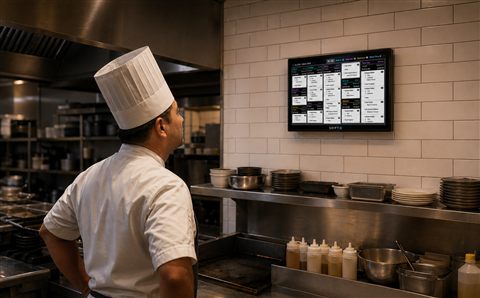
A Kitchen Display Screen, often called a KDS, is a digital screen used in the kitchen to display orders sent from the EPOS system.
Instead of printing a paper docket, the order appears on a screen. Chefs and kitchen staff can view active orders, manage preparation, track timing, mark items as completed and move orders through the kitchen workflow.
This is especially useful in venues with multiple preparation areas, such as starters, mains, grill, fryer, pizza, dessert, takeaway or pass stations.
Kitchen Printer vs Kitchen Display Screen
A kitchen printer produces a physical paper docket.
A Kitchen Display Screen shows the order digitally.
Both can send orders from the EPOS to the kitchen, but they work very differently once the order arrives.
A kitchen printer is simple, but printed dockets can get lost, damaged, misread or buried during busy service. A Kitchen Display Screen gives the team a live view of active orders and helps organise the kitchen more clearly.
For small, low-volume venues, a printer may be enough. But for restaurants, pubs, cafés, hotels and takeaways with busy kitchens, a Kitchen Display Screen can drive better efficiency.
1. Clearer Orders for the Kitchen Team
Paper dockets can quickly become messy during service.
They can be torn, misplaced, stained, dropped or hidden behind other tickets. In a busy kitchen, even a small delay in finding the right docket can affect service.
With a Kitchen Display Screen, orders are displayed clearly on screen. Staff can see table numbers, order details, modifiers, special requests and course information in one place.
This helps reduce confusion and gives the kitchen a better view of what needs to be prepared.
2. Orders Can Be Sent to the Right Station
One of the biggest benefits of a Kitchen Display Screen is station-based order routing.
For example:
- Drinks can go to the bar.
- Starters can go to the starter station.
- Mains can go to the main kitchen screen.
- Grill items can go to the grill station.
- Desserts can go to the dessert station.
- Takeaway orders can be separated from dine-in orders.
This means each team member only needs to focus on the items that are relevant to them.
Instead of one printer producing a long docket for the whole kitchen, each station can receive the part of the order it needs to prepare.
That can make service smoother, especially when the kitchen is under pressure.
3. Better Timing During Busy Service
Timing is one of the hardest parts of hospitality.
A kitchen may have several tables open at once, with starters, mains, sides, desserts, takeaway orders and delivery orders all moving at the same time.
A Kitchen Display Screen can help the team see what is waiting, what is being prepared and what needs attention next.
Orders can be organised visually, making it easier for the kitchen to prioritise work and keep service moving.
This is particularly useful during peak periods such as lunch rushes, Friday evenings, match days, hotel breakfast service or busy takeaway windows.
4. Less Paper and Less Clutter
Kitchen printers rely on paper rolls.
That means more paper usage, more clutter and more dockets building up around the pass or preparation stations.
A Kitchen Display Screen reduces the reliance on printed tickets and helps keep the kitchen cleaner and more organised.
This does not just improve the look of the workspace. It can also make it easier for staff to stay focused and avoid losing important order information.
5. Easier to Track Order Progress
With a kitchen printer, once the docket prints, the system has limited visibility over what happens next.
Has the order been started?
Has it been completed?
Is it waiting at the pass?
Has one station finished while another is still preparing?
With a Kitchen Display Screen, kitchen staff can interact with the order. Depending on the setup, orders can be marked as started, completed, bumped to another station or cleared when finished.
This gives the kitchen better control and helps the front-of-house team understand the flow of service more clearly.
6. Helps Reduce Missed Items
Missed items are one of the most frustrating problems in hospitality.
A side dish can be forgotten. A starter can be missed. A modifier can be overlooked. A sauce, allergy note or special request can be buried on a busy paper docket.
A Kitchen Display Screen helps present order information more clearly.
When items are routed to the correct station and displayed in an organised way, the risk of missed items can be reduced.
That means fewer delays, fewer customer complaints and less pressure on staff.
7. Better for Complex Menus and Modifiers
Modern hospitality orders are rarely simple.
Customers may ask for:
- No onions.
- Sauce on the side.
- Gluten-free options.
- Allergy notes.
- Extra toppings.
- Split courses.
- Substitutions.
- Cooking preferences.
- Delivery or collection timing.
With paper dockets, these details can be easy to miss, especially when the kitchen is busy.
A Kitchen Display Screen can make modifiers and special instructions easier to see, helping the kitchen prepare the order correctly the first time.
For restaurants, cafés, pubs and takeaways with customisable menus, this can make a real operational difference.
8. Stronger Communication Between Front-of-House and Kitchen
A connected EPOS system should help the floor, bar and kitchen work together.
When waiting staff take an order at the table using a handheld device, the drinks can go straight to the bar and the food can go straight to the kitchen display screen.
The kitchen receives the food order without waiting for a staff member to walk back to the till. The bar can start preparing drinks while the food order is still being completed. The waiter or waitress can remain with the customer instead of running back and forth.
This creates a better service flow:
Table ordering → bar order → kitchen display → food preparation → table service
That is where the real efficiency comes from.
9. Useful for Takeaway and Delivery Orders
Kitchen Display Screens are not just useful for table service.
They can also help with takeaway, collection and delivery workflows.
Orders can be separated by type, such as dine-in, takeaway, collection or delivery. This makes it easier for the kitchen to see what needs to be prepared and when.
For venues handling both sit-in and takeaway orders, this can reduce confusion and help keep service organised.
10. Better Visibility for Managers
A Kitchen Display Screen can also help managers understand how the kitchen is performing.
When orders are managed digitally, it becomes easier to see bottlenecks and identify where delays are happening.
For example:
- Are starters moving quickly but mains slowing down?
- Is the grill station under pressure?
- Are takeaway orders affecting table service?
- Are orders sitting too long before being completed?
This gives owners and managers better insight into service performance and helps them make smarter operational decisions.
When Is a Kitchen Printer Still Useful?
Kitchen printers are not obsolete.
They can still be useful in certain areas, such as:
- Bar dockets.
- Simple food preparation areas.
- Backup printing.
- Smaller cafés.
- Low-volume kitchens.
- Specific prep stations.
- Venues that prefer a paper record.
For some businesses, a printer may be enough.
For others, the best setup may be a combination of kitchen printers and kitchen display screens.
For example, drinks might print at the bar while food orders go to a kitchen display. Or a takeaway docket might print for bagging while the kitchen uses screens for preparation.
The right setup depends on how your venue operates.
Why Choose a Kitchen Display Screen with ithPOS?
ithPOS helps hospitality venues build connected EPOS workflows that match real service environments.
Our solutions can support:
- Handheld table ordering.
- Kitchen display screens.
- Bar printing.
- Course management.
- Order routing.
- Modifiers and special requests.
- Integrated payments.
- Pay at table.
- Reporting and visibility.
- Restaurant, café, pub, hotel and takeaway workflows.
The aim is simple: help your team serve faster, reduce mistakes and keep communication clear between the floor, bar and kitchen.
Final Thoughts
A kitchen printer can send an order to the kitchen.
A Kitchen Display Screen can help manage the kitchen.
That is the key difference.
For busy hospitality venues, a Kitchen Display Screen can improve communication, reduce paper clutter, support station-based preparation, help track order progress and make service more efficient.
If your kitchen is still relying only on printed dockets, it may be time to consider whether a Kitchen Display Screen could help your team work faster and more accurately.